Acreage & Pasture Clearing in Marion County
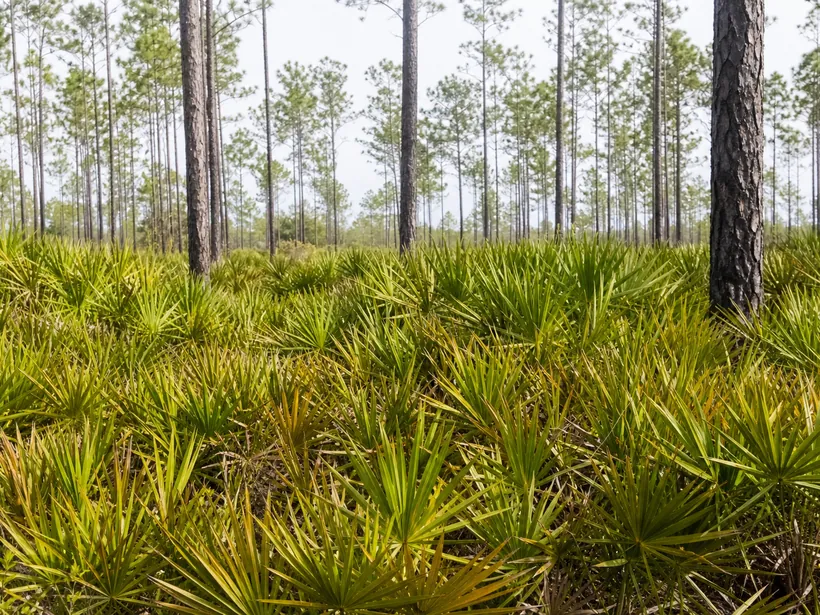
📞 Call (352) 780-7314Full land clearing is for when the land has to change jobs: wooded acreage becoming pasture, an overgrown parcel becoming a homesite, scrub becoming a barn pad. Trees come down, stumps come out, roots get grubbed, and you're left with ground a builder or a tractor can actually work.
What's included
- Tree clearing and felling: pines, water oaks, sweetgums; protected specimen live oaks flagged and preserved per county code
- Stump grinding or grubbing: grubbing (full root removal) for anything being built on or plowed
- Debris handling your way: mulched in place, piled for burn (where lawful), or hauled off; the choice moves the price, so we quote all options
- Rough grade: cleared land left level enough to mow; full pad work under grading & dirt work
The machine sets the rate, the land sets the days
People ask for a per-acre number and we give one, but here's the honest version. Three setups do most of the acreage work in Marion County:
- Skid steer with a mulching head: palmetto, vines, and trees up to about 8 inches. Cheapest day rate, fastest on light scrub. Leaves stumps flush with the ground.
- Excavator with a mulching head or thumb: takes the bigger pine and oak, and it pulls root balls. The usual pick for a wooded 5 to 20 acres where some of it is coming out by the roots.
- Dozer with a root rake: grubbing, piling, and rough grade. What you want when the whole footprint has to be clean dirt.
Industry day rates run about $1,000 to $1,600 for a skid steer mulcher and $1,200 to $2,500 for an excavator or dozer, operator included. The machine that costs more per day is often cheaper per acre, because it finishes in two days what the small one needs five for. That's the math we do on the walk. It's also why two quotes for the same parcel can be a thousand dollars apart and both be honest.
How long acreage takes
Light scrub mulches at 2 to 4 acres a day. Wooded land with grubbing runs closer to an acre a day, less when the oaks are big. So 20 acres of old pasture gone to scrub is usually a one- to two-week job for one machine. Twenty acres of dense pine and oak taken to bare dirt is closer to a month, or two machines. Wet ground stretches all of it: from June through September a low spot can be too soft to run on for days after a storm, which is why the dry months from November through May book first for acreage work.
Stumps: ground or grubbed
Two different jobs, two different prices. Stump grinding chews the stump down below grade and leaves the roots to rot. Fine for a yard or a pasture you'll mow. Grubbing pulls the whole root ball with an excavator or root rake, and it's required for anything you're building on, plowing, or fencing through, because roots left under a slab or a post rot into a soft spot within a few years. Laurel oaks and water oaks rot fastest. Live oak root flares spread wider than the canopy did and take real digging. We'll tell you which one your plan actually needs. Grubbing a pasture nobody will ever plow is money wasted.
Pasture reclamation
This is horse country, and a big share of our acreage calls are old pasture gone to scrub after a few years without a bush hog. If the regrowth is still small, mulching it and then keeping it mowed is the cheapest path back to grass. If it's been twenty years and there are 12-inch pines out there, it's a clearing job. Either way the order is the same: clear, grub what's coming out, root-rake the debris, rough-grade, then seed. Bahia goes in during spring or early summer, when the warm months and the rains do the work; UF/IFAS puts about 85% of bahiagrass growth between April and September, so seed in October and you'll be looking at sand until spring.
Debris: mulch it, burn it, or haul it
Mulching in place is the cheapest, and it's what we do unless the ground has to be bare. Burn piles are the old Florida answer and they still work on rural acreage, but under state law every land-clearing pile burn needs an authorization from the Florida Forest Service before it's lit, and they don't issue one when it's dry and windy, which is exactly the week you want to be done. Hauling is the expensive option and the only one on tight lots with neighbors close by. We quote all three so you can see what each is worth to you.
Marion County pricing reality
Statewide data puts land clearing at $1,200–$4,800 per acre for lightly wooded land, up to $6,700+ per acre heavily wooded, and Marion County tracks those numbers closely. What moves your quote: tree density and diameter, grubbing vs. surface clearing, debris disposal, wet spots, and access for equipment. A 5-acre pasture reclamation with scattered oaks prices very differently per acre than a dense 1-acre building lot, which is why we walk parcels instead of quoting blind off aerials.
Clearing, or mulching?
If the goal is usable rather than buildable, forestry mulching is usually half the cost: no hauling, no burn piles, mulch layer left in place. If anything's being built, poured, or planted in rows, you want true clearing with grubbing. We'll tell you plainly which one your project needs; more than once the honest answer has cut a caller's budget in half.
Sources: HomeGuide land clearing cost data · HomeGuide mulcher and excavator day rates · Marion County LDC, tree protection (Art. 6 Div. 7) · FWC gopher tortoise permitting · Florida Statutes §590.125, open burning authorization · UF/IFAS, bahiagrass pasture management
Common Questions
What does land clearing cost per acre here?
In Marion County, lightly wooded parcels typically run $1,200–$4,800 per acre; dense oak and pine with grubbing can reach $6,700+ per acre. Access, stumps, and debris disposal move the number.
Is my land in a wetland or protected area?
Marion County sits across two water management districts (SJRWMD east, SWFWMD west); wetland areas always require review before clearing. Uplands on residential parcels are usually clear to work, and we confirm before quoting.
What about gopher tortoises?
Florida law requires an FWC permit before clearing land with gopher tortoise burrows. Surveys run roughly $200–$350; relocations are $5,500+ per tortoise. We spot burrows during the walk-through so you're never surprised mid-job.
Clearing vs. forestry mulching: which do I need?
Mulching is faster and cheaper when the goal is usable, park-like land. Full clearing with root grubbing is for build sites, pads, and pasture conversion where roots and stumps must go.
How long does it take to clear 20 acres?
Light scrub mulches at 2 to 4 acres a day, so 20 acres of regrowth is roughly a week for one machine. Wooded acreage taken to bare dirt with grubbing runs closer to an acre a day, so 20 acres is three to five weeks for one machine, or we bring two. Wet ground stretches every number.
Ready to see the land under all that brush?
Free walk-and-quote anywhere in Marion County, most estimates inside 24 hours.
📞 Call (352) 780-7314